Soft Wash Versus Pressure Wash: Which One Your House Actually Needs
They get lumped together as the same service, but using the wrong one on the wrong surface can do real damage.
September 1, 2026 · 3 min read
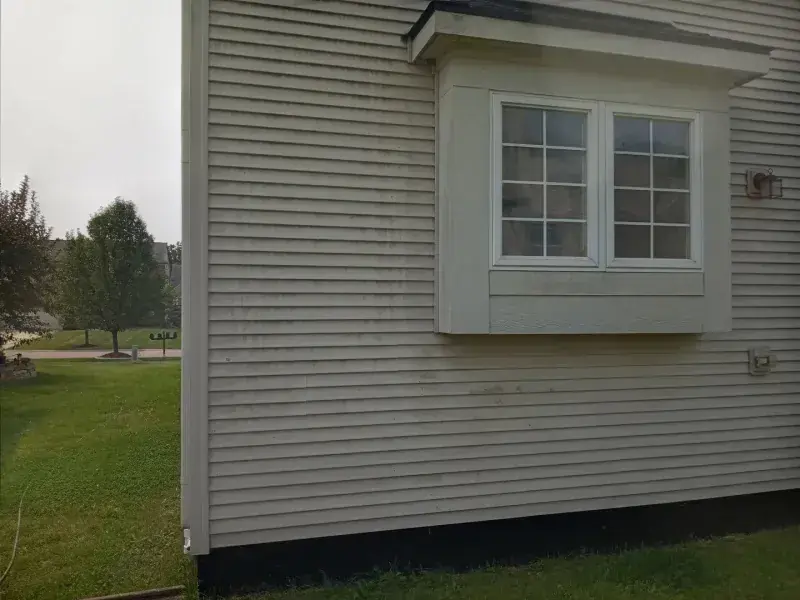
Power washing and soft washing get talked about like they're the same thing with two names. They aren't. They're two different methods built for two different kinds of surfaces, and using the wrong one in the wrong place is one of the more common ways a homeowner ends up with damage instead of a clean house.
What each method actually does
Power washing, sometimes called pressure washing, uses high water pressure to physically blast dirt, grime, and stains off a hard surface. It's the right tool for concrete driveways, sidewalks, patios, parking lots, and other surfaces that can take mechanical force without being damaged by it. There's nothing gentle about it and nothing needs to be. Concrete doesn't crack from a pressure washer, and years of embedded oil stains and tire marks usually need that level of force to actually lift.
Soft washing works differently. Instead of relying on pressure to strip buildup away, it uses a low-pressure application of cleaning solution that breaks down algae, mold, and mildew at the root, then rinses it clear. The pressure is low enough that it won't strip paint, crack vinyl, or drive water behind siding into places it shouldn't go. That distinction matters because vinyl, wood, and painted exteriors are far more vulnerable to concentrated pressure than concrete is.
There's also a difference in how long each result tends to last, and it comes down to what each method actually addresses. High pressure on a hard surface physically removes what's sitting on top, which is usually enough since concrete doesn't host active biological growth the way siding and roofing can. Soft washing, by treating algae and mold at the root rather than just knocking visible buildup off the surface, tends to hold longer against regrowth than a rinse alone would, because a surface rinse can leave spores behind that simply regrow within weeks.
Where the wrong choice does real damage
Roofing is the clearest example. High pressure directed at asphalt shingles can dislodge the protective granules that shield them from UV damage, and on some manufacturer warranties, using high pressure on a roof voids the coverage outright. Soft washing is the manufacturer-recommended method for exactly that reason. It removes the black streaking and moss without touching the granule layer, and the results typically hold for two to three years before streaking starts to return.
- Vinyl and wood siding: soft wash, to avoid stripping, denting, or forcing water behind panels
- Painted trim, fascia, and soffits: soft wash, to protect the paint layer itself
- Asphalt shingle roofing: soft wash only; high pressure can void manufacturer warranties
- Concrete driveways, sidewalks, and parking lots: power washing, since the surface can handle it and often needs it
- Pavers and patios: power washing, though care around joint sand and mortar lines still matters
Why this matters more than it seems
A lot of exterior cleaning gone wrong isn't from a lack of effort, it's from the wrong method applied to the right intention. Someone wants their siding clean, reaches for the highest setting on a rented pressure washer, and ends up with cracked vinyl or water intrusion they won't discover until it shows up as a stain inside a wall months later. The method matters as much as the intent.
Brick and older masonry deserve their own mention here, since they're common across Ann Arbor's historic neighborhoods and Chelsea's downtown storefronts. Mortar joints are softer than the brick itself and can erode under sustained high pressure, which isn't obvious damage in the moment but shortens the life of the joint over years of repeated cleanings done the wrong way. Soft washing is the safer approach on most brick exteriors for exactly that reason, cleaning the surface without eroding what's holding it together.
Shining Star Power Washing uses the correct method for each surface as a matter of course, not an upsell. House washing, roof cleaning, and gutter work are all soft-washed with plant-safe, biodegradable products that are gentle on landscaping and pets. Driveways, walkways, and other hard surfaces get the higher-pressure treatment they're built to handle. Every job across Whitmore Lake, Ann Arbor, Chelsea, and Fenton is backed by a one-year satisfaction guarantee, and a free estimate up front means you know what's being done and why before anything starts. Most jobs run $150 to $450 depending on scope, and Saturday appointments are available for anyone who can't get a weekday off.
Shining Star Power Washing, (517) 605-5020
Call (517) 605-5020More articles
How Often Does a Michigan Home Actually Need Washing?
The honest answer is it depends on your lot, not the calendar, and here's what actually moves the number.
Why Michigan Gutters Need Clearing More Than Once a Year
Michigan's tree cover and freeze-thaw cycle put more strain on gutters than a single autumn cleanout can handle.